
Southeast Asia Program
Contemporary China | Provincializing China: Race and Architecture
March 14, 2022
4:45 pm
Rockefeller Hall 122, 122
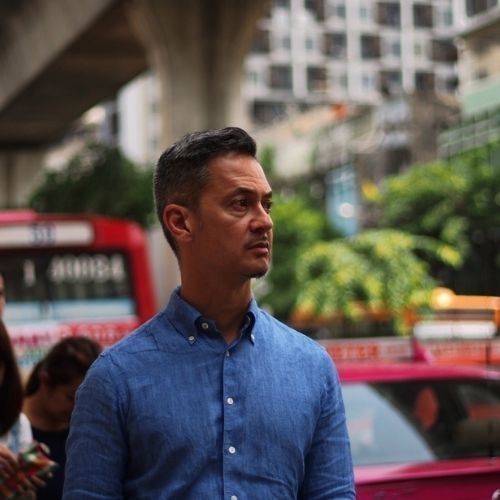
HYBRID event: CCCI welcomes Lawrence Chua, of Syracuse University, to speak on "Provincializing China: Race and Architecture in Colonial-era Penang."
This presentation examines the role of architecture in racialization in 19th and 20th-century Penang. It uses three case studies: the Khoo Kongsi (邱公司) (1850), a Hokkien clan temple; the Penang mansion of Cheong Fatt Tze (1898-1903), deemed “China’s first capitalist and last mandarin”; and the mansions built by wealthy towkay or comprador families on Northam Road in the early 20th century. These three sites allow scholars to tease out the diverse histories of the region that the term “Chinese” often disguises. Racialized identities began to develop in mid-19th-century Penang that sought to consolidate diverse migrant groups into racial categories that could be more easily controlled and manipulated by the colonial state. Architecture became a key instrument in the racialization of urban space and the built environment but it also expressed ambivalence towards official categories of race.
Lawrence Chua, is an Associate Professor at the School of Architecture, Syracuse University.
The Contemporary China Initiative this spring is directed by Arnika Fuhrmann, Associate Professor of Southeast Asian Studies at Cornell University and the author of Ghostly Desires: Queer Sexuality and Vernacular Buddhism in Contemporary Thai Cinema.
This semester's CCCI lecture series is connected to Asian 6623 being taught by Professor Fuhrmann called 'The City.'
CCCI spring 2022 is generously co-sponsored by the East Asia Program, the Department of History, Asian Studies, and the Migrations initiative.
Additional Information
Program
Einaudi Center for International Studies
East Asia Program
Southeast Asia Program
GETSEA Spring Mini-Courses

Apply by February 4!
GETSEA is offering two free and virtual mini-courses this spring on topics in Southeast Asian studies, open to graduate students from a wide range of backgrounds!
Current graduates students at a GETSEA member institution receive first priority in admission to the courses, though graduate students at any institution who research in and around Southeast Asia may apply for admission to take a mini-course.
These courses do not offer course credit for students at their home institutions. However, students are encouraged to work with a faculty member at their home institution to count the course towards an independent/directed study/reading credit. Mini-courses have a workload roughly equivalent to that of a one-credit course – approximately 45 hours in total, including class time, readings, and other work.
Details about previous mini-courses are available here, and any questions or proposals can be submitted to getsea@cornell.edu.
Spring 2022 Mini-Courses
Urban Dreams: Bangkok, Singapore
Taught by Andrew Johnson, University of California, Berkeley
Offered virtually from February 23 to March 30, 2022, Wednesdays, 7:00pm-9:00pm ET
Application deadline: February 4, 2022
Theorizing the Southeast Asia Archive
Taught by Judith Henchy, University of Washington
Offered virtually from March 30 to May 4, 2021 Wednesdays, 7:00pm-9:00pm ET
Application deadline: February 4, 2022
The Mini-Course Experience
For some broader context on the GETSEA mini-course initiative, we are also happy to share an article written by Douglas Labadin (MA student, Chulalongkorn University), about his participation in our Fall 2021 mini-course, The Performing Arts and in Southeast Asian History and Society.
And I thought to myself:
“Do I REALLY want to wake up at 7 in the morning every Tuesday to attend this online course offered by GETSEA?”
When I found out about this amazing opportunity from the consortium for Graduate Education and Training in Southeast Asian Studies (GETSEA), I was excited to apply immediately. As a student who used to study dance and the performing arts, I was eager to dive into these topics again. However, since I was physically in Bangkok, Thailand, the time difference would mean that I would have to wake up quite early in the morning to attend the classes that were being offered. On top of all that, I also had to attend my normal classes with my home institution (Chulalongkorn University) right after that – that would mean five hours of continuous learning, a daunting prospect. It was worth it.
The first class started out with a bang, as we were welcomed by three experienced instructors in their respective fields – Supeena Insee Adler, Helen Rees, and Maureen Russell. As a graduate student in the Southeast Asian program of Chulalongkorn University, this course was helpful in that it helped me to understand the history of the various forms of performing arts in Southeast Asia, and how that history affects the current society as well. This course has also provided me with new perspectives when it comes to observing a certain situation related to the performing arts, and I am now more equipped to assess a certain issue using multiple aspects, which in return helps me with my critical thinking.
During the classes, the instructors provided a multitude of external resources such as videos, films, songs, and many more. Personally, I feel that this mode of teaching not only kept the classes interesting on a weekly basis, but also helped the students to visualize the lessons better, allowing for a higher level of understanding of the material. The readings that were required for each class were also selected beautifully, as most of the articles that we were asked to read were very interesting and helpful to the current theme of the class. We were introduced to many different authors that specialize in the field of the performing arts of Southeast Asia, and this opened the door to a whole collection of literary resources for myself and my classmates.
Apart from that, we were also given the opportunity to utilize several open access websites that offer different forms of audio recordings and field study findings, which proved to be very helpful in my own research. Websites such as California Revealed and Ethnomusicology: Global Field Recordings were filled with so many resources that can be used by students for their own research topics, and I am grateful that through this course, I was able to learn how to use these websites properly to obtain the best results. It was confusing in the beginning, especially when I was unsure about what keywords to use when looking for specific recordings or findings, but after a special lecture that was given during the course, I find it easier now to access these websites to look for what I need. It just takes a little practice, and patience!
Another aspect that I admired about this course is that the students were allowed to engage in discourse almost every week, and the instructors would always make us feel comfortable about sharing our feedback and concerns during the class. The instructors provided space for students to share about their thoughts on the required readings, and we were also asked to post at least one question about every article in the allocated website. This helps me to understand the perspective that each student might have about each article, and thus providing me with more tools to understand the article better and the current theme of the class.
In addition to that, my classmates were also very happy and willing to share about their own knowledge about the topic in each class, and which helped us create a more comprehensive discussion about the current theme. Although the classes would definitely have been more engaging if it was conducted in-person, the good thing about having it executed virtually is that anyone from all around the world is able to join the class, without having to incur extra costs that come with physically migrating to another country to attend classes there. I am truly grateful to have been in the same class with a group of knowledgeable and respectable individuals, who have also taught me so many new things during the course. I am eager to see what connections and collaborations can be made in the future.
Overall, I find that the online course that was offered by GETSEA to be quite rewarding, as I was able to learn more about the various forms of performing arts in Southeast Asia such as shadow puppets, traditional musical ensembles, different renditions of pop songs, masked performances and so on. Although sometimes I dreaded waking up so early in the morning to attend these classes, all those frustrations disappeared once the class started, and I was able to interact with the instructors and my classmates. I will miss seeing those happy faces every Tuesday morning! I hope that these online mini-courses will be offered again in the future as it is an effective way for students to forge global connections and create meaningful networking.
Additional Information
Contemporary China | Everyday Erotics: Older Chinese Lesbians
February 22, 2022
7:30 pm
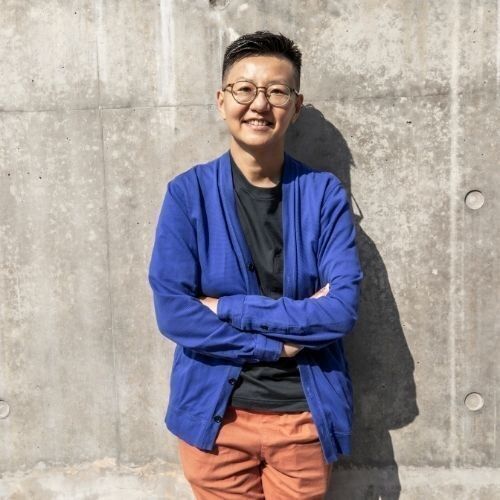
The Cornell Contemporary China Initiative is pleased to start its spring '22 lecture series with Denise Tang of the Lingnan University of HK. Her talk is titled,
'Everyday Erotics: Older Chinese Lesbians and Bisexual Women'
This talk presents the life stories of older Chinese lesbians and bisexual women (born in the 1940s and 50s) in Hong Kong, Singapore, and Taiwan through an interdisciplinary ethnography combining fieldwork and cultural analysis of inter-Asia mediations of femininities and masculinities. I will examine the figure of the Chinese lesbian as both real and imagined in our historical narratives and contemporary social worlds.
Denise Tang, is an Associate Professor, in the Department of Cultural Studies, and the Associate Dean, of the Arts Department at Lingnan University, in Hong Kong.
The Contemporary China Initiative this spring is directed by Arnika Fuhrmann, Associate Professor of Southeast Asian Studies at Cornell University and the author of Ghostly Desires: Queer Sexuality and Vernacular Buddhism in Contemporary Thai Cinema.
This semester's CCCI lecture series is connected to a course Asian 6623 being taught by Professor Fuhrmann called 'The City.'
CCCI spring 2022 is generously co-sponsored by the East Asia Program, the Department of History, Asian Studies, and the Migrations initiative.
Additional Information
Program
Einaudi Center for International Studies
East Asia Program
Southeast Asia Program
Migration in the Age of Pandemics (Lund Critical Debate)

February 16, 2022
9:30 am
The spread of the COVID-19 pandemic has strained the world's healthcare systems and compounded challenges for governments and NGOs dealing with global waves of forced and voluntary migration. These movements of peoples across borders have magnified pressing issues ranging from social and economic inequalities and global climate change to civil war and political unrest. In the United States and worldwide, how can we promote the best public health outcomes while working to protect human rights, manage resources, and address inequality?
With a focus on the intersection of mobility, human rights, and public health, the Einaudi Center's Lund Critical Debate this year brings together one of the world's leading public health policymakers at the World Health Organization with a United States Senator and Chair of the Senate Foreign Relations Committee, who led the Senate's efforts to study the consequences of global forced migration. The event will examine the geopolitical dimensions, the epidemiological aspects, and the humanitarian issues of this critical topic. The debate will illuminate key issues surrounding public health, migration, and racial and social justice at stake globally and nationally.
We welcome questions during the event. Registration is required.
Panelists
Dr. Zsuzsanna Jakab serves as Deputy Director-General of the World Health Organization (WHO), the United Nations agency dedicated to promoting public health and responsible for responding to health emergencies. Prior to her current appointment, Dr. Jakab has held several high-profile national and international public health policy positions: as WHO Regional Director for the European Region (2010-2019); as Founding Director of the European Centre for Disease Prevention and Control (2005-2010); and as State Secretary at the Hungarian Ministry of Health, Social, and Family Affairs (2002-2005), where she managed the country’s preparations for European Union accession in the area of public health.
Sen. Bob Menendez (D-NJ). The son of Cuban immigrants, Sen. Menendez has represented the state of New Jersey in the United States Senate since 2006. As Chairman of the Senate Foreign Relations Committee, he has established himself as a foreign policy leader, seeking to do globally what he has done in New Jersey—supporting the most vulnerable in our society and lending a voice to those least able to speak for themselves. In June 2020, under his leadership, the committee published the report, "Global Forced Migration: The Political Crisis of Our Time." He helped pass the Senate's COVID relief packages and other healthcare legislation as well as playing a key role in shaping immigration reform bills. Prior to his position in the Senate, he served in the U.S. House of Representatives from 1993-2006.
Moderator
Dr. Gunisha Kaur is an assistant professor of anesthesiology who specializes in human rights research. Dr. Kaur serves as the Founding Director of the Human Rights Impact Lab, a Medical Director of the Weill Cornell Center for Human Rights, and a Faculty Fellow at the Mario Einaudi Center for International Studies, where she co-leads the migrations research team. Dr. Kaur’s research interests focus on advancing the health of displaced populations such as migrants, refugees, and asylum seekers. She has used her extensive training and research in neuroscience as an analytical framework to pioneer the study of human rights through scientific methodology. Her research is currently funded by the National Institutes of Health. A foremost leader in scientific investigations into migrant health, Dr. Kaur was selected as a member of the Sigma Xi Scientific Research Honor Society and as a Stephen M. Kellen Term Member at the Council on Foreign Relations. She earned her B.S. from Cornell University in 2006, M.D. from Weill Cornell Medical College in 2010, and her M.A. in medical anthropology from Harvard University in 2015.
About the Debate
This year's Lund Critical Debate is hosted by the Mario Einaudi Center for International Studies and co-sponsored by Migrations: A Global Grand Challenge and in partnership with the Institute of Politics and Global Affairs, with production assistance from eCornell. Established in 2008, Einaudi's Lund Critical Debate Series is made possible by the generosity of Judith Lund Biggs ’57.
Additional Information
Program
Einaudi Center for International Studies
Reppy Institute for Peace and Conflict Studies
East Asia Program
Southeast Asia Program
Latin American and Caribbean Studies
Institute for African Development
Institute for European Studies
South Asia Program
Info Session: Fulbright U.S. Student Program for Undergraduates

March 30, 2022
4:45 pm
The Fulbright U.S. Student Program supports college graduates conducting research or teaching in any field in more than 150 countries. Applications are due in the fall; students who wish to begin the program immediately after graduation are encouraged to start the process in their junior year.
United States citizens in any field of study are eligible.
Contact: fulbright@einaudi.cornell.edu, https://einaudi.cornell.edu/fulbright-us-student-program
Additional Information
Program
Einaudi Center for International Studies
Reppy Institute for Peace and Conflict Studies
East Asia Program
Southeast Asia Program
Latin American and Caribbean Studies
Institute for African Development
Institute for European Studies
South Asia Program
Info Session: Migration Studies Minor

March 9, 2022
4:45 pm
The migration studies minor is a university-wide, interdisciplinary undergraduate minor that prepares students to understand the historical and contemporary contexts and factors that drive international migration and shape migrant experiences around the globe. This minor draws on the rich course offerings found across the humanities and social sciences at Cornell, and is designed to draw students outside of their major fields and to extend their knowledge beyond a single country.
Contact: migration-minor@einaudi.cornell.edu,
Additional Information
Program
Einaudi Center for International Studies
Reppy Institute for Peace and Conflict Studies
East Asia Program
Southeast Asia Program
Latin American and Caribbean Studies
Institute for African Development
Institute for European Studies
South Asia Program
Info Session: International Relations Minor

March 7, 2022
4:45 pm
Is the Einaudi Center's International Relations minor for you? Here's a chance to find out. Graduates go on to successful careers in fields like international law, economics, agriculture, trade, finance, journalism, education, and government service.
Contact: irm@einaudi.cornell.edu; https://einaudi.cornell.edu/academics/international-relations-minor
Additional Information
Program
Einaudi Center for International Studies
Reppy Institute for Peace and Conflict Studies
East Asia Program
Southeast Asia Program
Latin American and Caribbean Studies
Institute for African Development
Institute for European Studies
South Asia Program
Info Session: Fulbright Opportunities for Graduate Students

February 23, 2022
4:45 pm
The Fulbright U.S. Student Program provides full funding for graduate and professional students conducting research or teaching in any field in more than 150 countries. Open to U.S. citizens only.
The Fulbright-Hays Doctoral Dissertation Research Abroad Program supports doctoral students conducting research in modern languages or area studies for six to 12 months. Open to U.S. citizens and permanent residents of the United States. Travel to Western European countries is not eligible.
Contact: fulbright@einaudi.cornell.edu, https://einaudi.cornell.edu/fulbright-us-student-program
Additional Information
Program
Einaudi Center for International Studies
Reppy Institute for Peace and Conflict Studies
East Asia Program
Southeast Asia Program
Latin American and Caribbean Studies
Institute for African Development
Institute for European Studies
South Asia Program
Info Session: Fulbright U.S. Student Program for Undergraduates

February 21, 2022
4:45 pm
The Fulbright U.S. Student Program supports college graduates conducting research or teaching in any field in more than 150 countries. Applications are due in the fall; students who wish to begin the program immediately after graduation are encouraged to start the process in their junior year.
United States citizens in any field of study are eligible.
Contact: fulbright@einaudi.cornell.edu, https://einaudi.cornell.edu/fulbright-us-student-program
Additional Information
Program
Einaudi Center for International Studies
Reppy Institute for Peace and Conflict Studies
East Asia Program
Southeast Asia Program
Latin American and Caribbean Studies
Institute for African Development
Institute for European Studies
South Asia Program
Info Session: Summer Language Programs and Funding Opportunities

February 9, 2022
4:45 pm
Want to learn a language this summer? Learn about Foreign Language and Area Studies fellowships and Critical Language Scholarships, which provide fully funded opportunities for Cornell undergraduate and graduate students to study South and Southeast Asian languages in the summer, and even in the academic year.
Additional Information
Program
Einaudi Center for International Studies
Southeast Asia Program
South Asia Program