
Institute for European Studies
Announcing: Art and Architecture of Migration and Discrimination

Edited by Esra Akcan and Iftikhar Dadi
Esra Akcan (IES) and Iftikhar Dadi (SAP) announce the release of their new edited volume on the art and architecture of 20th-century partitions and Muslim diasporas in Europe.
Additional Information
The Drama in Russia’s Election is All About What Putin Will Do With Another 6 Years in Power

Bryn Rosenfeld, IES
“Russia’s presidential election is not so important as what will come after. Putin has often postponed unpopular moves until after elections,” says Bryn Rosenfeld, assistant professor of government.
Additional Information
American Democracy Challenges in Comparative Perspective
April 10, 2024
2:30 pm
Uris Hall, G08
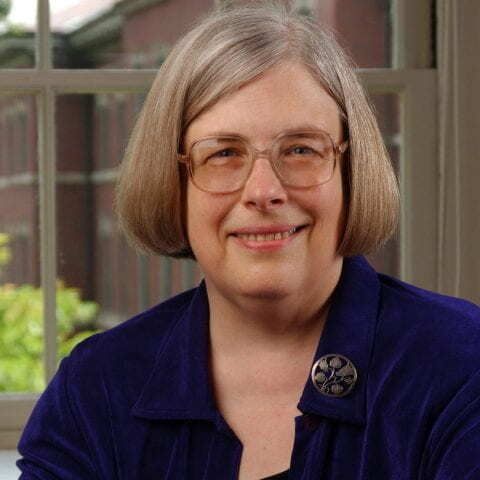
Anti-democratic politics is a global phenomenon. Apart from the United States, countries in Europe, Latin America, Africa have seen the rise of populism, polarization, and illiberal politics. This event is an informal conversation among Einaudi Center faculty Mabel Berezin (IES), Ken Roberts (DTR and LACS), and Rachel Beatty Riedl (Einaudi Center director and DTR) and renowned Harvard sociologist Theda Skocpol, AD White Professor-at-Large, on American democracy’s place among global challenges to democracy.
This event is hosted by the Institute for European Studies in collaboration with the Einaudi Center's Democratic Threats and Resilience research priority.
Theda Skocpol is the Victor S. Thomas Professor of Government and Sociology at Harvard University. The author of twelve books, twelve edited collections, and more than seven dozen articles, Skocpol is recognized as one of the most cited and widely influential scholars in the modern social sciences. Her work has contributed to the study of comparative politics, American politics, comparative and historical sociology, U.S. history, and the study of public policy. Her first book, States and Social Revolutions: A Comparative Analysis of France, Russia, and China (1979), won the 1979 C. Wright Mills Award and the 1980 American Sociological Association Award for a Distinguished Contribution to Scholarship. Skocpol edited Vision and Method in Historical Sociology (1984) and co-edited the influential Social Science Research Council collection Bringing the State Back In (1985). Since the 1990s, Skocpol’s research has focused on US politics in historical and comparative perspective. Her Protecting Soldiers and Mothers: The Political Origins of Social Policy in the United States (1992), won five scholarly awards. Her most recent book is Upending American Politics: Polarizing Parties, Ideological Elites, and Citizen Activists from the Tea Party to the Anti-Trump Resistance (edited with Caroline Tervo, 2020). Skocpol is an elected member of all three major U.S. interdisciplinary honor societies: the American Academy of Arts and Sciences, the American Philosophical Society, and the National Academy of Sciences. In 2009, she co-founded, and currently directs, the Scholars Strategy Network (SSN), whose mission is to improve public policy and strengthen democracy by encouraging nonpartisan public engagement by university-based scholars. SSN has grown into a national organization of over 900 scholars from 200+ universities, focused on bringing evidenced-based policy research to the public discourse.
Additional Information
Program
Einaudi Center for International Studies
Institute for European Studies
We Must Start Preparing the U.S. Workforce for the Effects of AI – Now

Virginia Doellgast, IES
Virginia Doellgast, professor of employment relations and dispute resolution, explains how to introduce AI in ways that lead to less employee resistance.
Additional Information
Hope & Possibility: German Studies and the Critical Imagination

April 13, 2024
11:00 am
A. D. White House, Guerlac Room
A Conference in Honor of Leslie A. Adelson,
Jacob Gould Schurman Professor of German Studies (Cornell University)
The conference is generously co-sponsored by Cornell University Departments of Comparative Literature, History of Art, Literatures in English, Near Eastern Studies, Philosophy, and the Africana Studies and Research Center; the Jewish Studies Program; the Feminist, Gender & Sexuality Studies Program; the Institute for German Cultural Studies; the Institute for Comparative Modernities; the Institute for European Studies; the Society for the Humanities; the Max Kade Foundation, Heinrich & Alice Schneider Fund, and the DAAD (German Academic Exchange Service).
This event is free and open to the public.
PROGRAM
Friday, April 12
2:00 Welcome and Introduction
2:30-3:30 Session 1
Anna Maree Parkinson (Northwestern University)
Hubris and Hope: Minor Details
Yasemin Yildiz (University of California, Los Angeles)
The German Widow Next Door: A Recurrent Figure of Transmission in Turkish-German Literature
MODERATOR: Patrizia McBride (Cornell University)
3:30-4:00 Coffee Break
4:00-5:30 Keynote Lecture: Fatima El-Tayeb (Yale University/Intersectional Black European Studies Project/Race, Migration, and Coloniality in Europe working group)
Transformative Archives and the Intersectional Black European Studies Project
MODERATOR: Paul Fleming (Cornell University)
Event website: https://events.cornell.edu/event/hope-possibility-german-studies-and-th…
5:30-6:30 Reception
Saturday, April 13
11:00-12:00 Session 2
Bettina Brandt (Pennsylvania State University)
From Vienna to Boston: Psychoanalytic Rescue Networks (1938)
Ela Gezen (University of Massachusetts, Amherst)
Aras Ören, the Archive of Migration and Traditions of Tomorrow
MODERATOR: Anette Schwarz (Cornell University)
1:30-2:30 Session 3
John Namjun Kim (University of California, Riverside)
Adelson's Riddle of Referentiality: Figures of “Nothingness” in Yôko Tawada
Dennis Wegner (Cornell University)
To Burst on Stage: Trans-Formations in Sasha Marianna Salzmann’s Dramatic Works
MODERATOR: Mari Jarris (Cornell University)
2:30-3:30 Session 4
Esther Kondo Heller (Harvard University)
In Black Music – The Poetry of Raja Lubinetzki
B. Venkat Mani (University of Wisconsin-Madison)
The Radiant Reader and an Illuminated Alphabet
MODERATOR: Erik Born (Cornell University)
3:30-4:00 Coffee Break
4:00-5:30 Round Table Conversation: Interdisciplinary German Studies at Cornell
Gerard Aching (Africana Studies and Research Center, Romance Studies)
Esra Akcan (Department of Architecture, Institute for Comparative Modernities)
Brett de Bary (Asian Studies, Comparative Literature)
Natalie Melas (Comparative Literature, Literatures in English, Institute for Comparative Modernities)
Annette Richards (Music, Graduate Field of German Studies)
David Yearsley (Music, Advisory Board, Cornell University Kluge Archive)
MODERATOR: Peter Gilgen (Institute for German Cultural Studies, German Studies, Comparative Literature)
5:30 Concluding Remarks
Additional Information
Program
Institute for European Studies
Getting to Climate Justice: A Global Approach

April 11, 2024
5:00 pm
Rockefeller Hall, Schwartz Auditorium, Room 201
Lund Critical Debate
Climate change has a disproportionate impact on the world’s most vulnerable populations, yet climate crises also impact people across the full spectrum of wealth and power. How do we understand these varied impacts and design climate policy to maximize human well-being and justice on a global level?
As climate change accelerates, we see the rise of violent conflict and humanitarian emergencies in some places but not others. In some places but not others, we see disruptions in food security and forced migration. And around the world, debates rage about access to energy, the need to profit from valuable natural resources, and pressures to reduce extraction and consumption.
This year’s Lund debate from the Mario Einaudi Center for International Studies explores how citizens and policymakers worldwide can act to increase justice in our shared climate crisis. The panel will discuss key issues surrounding societies, governments, business, and labor and ways to share responsibilities globally to reduce emissions and mitigate climate change.
How can we imagine new strategies for reshaping global trade and finance, national and transnational security policies, and environmental protections that go beyond political borders? Join climate journalist Kate Aronoff and climate security expert Joshua Busby (LBJ School of Public Affairs, University of Texas) for a conversation on our climate’s state of emergency and how governments can help.
***
Livestream for National and International Viewers
Can't join in person? Register to attend virtually at eCornell.
***
Panelists
Kate Aronoff is a Brooklyn-based staff writer at The New Republic, covering climate and energy politics, and a fellow at the Roosevelt Institute. She is the author of Overheated: How Capitalism Broke the Planet and How We Fight Back (2021) and the coauthor of A Planet to Win: Why We Need a Green New Deal (2019). Aronoff serves on Dissent magazine's editorial board and the advisory board of Jewish Currents.
Joshua Busby is professor of public affairs in the University of Texas at Austin’s Lyndon B. Johnson School of Public Affairs. His research focuses on climate change, global health, transnational advocacy movements, and U.S. foreign policy. Busby was principal investigator on two multimillion-dollar climate and security grants from the U.S. Department of Defense. He served as senior advisor for climate at the U.S. Department of Defense from 2021 to 2023. His newest book is States and Nature: The Effects of Climate Change on Security (2022).
Moderator
Rachel Bezner Kerr is director of Einaudi’s Institute for African Development and professor of global development in the College of Agriculture and Life Sciences. She served as coordinating lead author for the United Nations’ Intergovernmental Panel on Climate Change sixth assessment report chapter on climate change impacts and adaptation of food systems.
***
About the Debate
The Lund Critical Debate is a signature event of the Mario Einaudi Center for International Studies. Established in 2008, Einaudi's Lund debate series is made possible by the generosity of Judith Lund Biggs '57.
Additional Information
Program
Einaudi Center for International Studies
Reppy Institute for Peace and Conflict Studies
East Asia Program
Latin American and Caribbean Studies
Institute for African Development
Institute for European Studies
South Asia Program
Study Abroad Info Session: Bologna, Italy

March 18, 2024
4:45 pm
276 Caldwell Hall
Meet Andrea Ricci, Director, Bologna Consortial Studies Program, Cornell's undergraduate study abroad program for students with intermediate or advanced Italian. Live and study alongside Italian students in the oldest university in continuous operation. Enjoy the vibrant cultural life in this city famous for its food and its politics. Hear how the program works and ask your questions.
Additional Information
Program
Institute for European Studies
Unpaid Debts: The Jamaican Debt Crisis and the Remaking of Socialist Internationalism, 1975-1980

March 15, 2024
12:20 pm
McGraw Hall, 366
Second event of the Spring 2024 European History Colloquium. Professor Giuliana Chamedes of the University of Wisconsin-Madison will be joining us for a discussion of her chapter “Unpaid Debts: The Jamaican Debt Crisis and the Remaking of Socialist Internationalism, 1975-1980."
Additional Information
Program
Institute for European Studies
With Russian Economy Far From Collapse, U.S. Opts for Tougher Punishment

Nicholas Mulder, IES
“This is the first geopolitical crisis without all of the major Asian economies on board. The West does not have decisive economic power anymore. India and China are enough to keep Russia afloat,” says Nicholas Mulder, professor of history.
Additional Information
Masculine Figures: Fashioning Men and the Novel in Nineteenth-Century Spain

March 7, 2024
4:45 pm
Klarman, K164
Nicholas Wolters is Associate Professor in the Department of Spanish at Wake Forest University in Winston-Salem, NC. Before joining the faculty at Wake Forest, he earned his MA in Spanish and French literature from the University of Delaware and completed his PhD in Spanish at the University of Virginia. Nicholas’ teaching and research interests include modern and contemporary Iberian (Spanish, Catalan, and Portuguese) literature and visual culture, masculinities studies, and film and television studies. His interdisciplinary work on these and related topics appears in peer-reviewed edited volumes and journals such as Journal of Spanish Cultural Studies and Revista de Estudios Hispánicos.
His book, Masculine Figures: Fashioning Men and the Novel in Nineteenth-Century Spain (Vanderbilt University Press, 2023), studies cultural representations of men—from the student and the priest to the businessman and the heir—as signs of authorial self-fashioning among bourgeois novelists like Benito Pérez Galdós and Narcís Oller. By historicizing and analyzing a diverse array of texts including advertisements, department store catalogs, fashion plates, paintings, and Spanish- and Catalan-language memoirs and novels, Masculine Figures recovers the many threads connecting middle-class manhood, consumer culture, and artistic production amidst Spain’s fraught attempts to modernize.
Additional Information
Program
Institute for European Studies