
Institute for European Studies
The Egyptian Labor Corps: Race, Space, and Place in the First World War

March 23, 2022
5:00 pm
White Hall, 106
Kyle Anderson, assistant professor at SUNY Old Westbury, will give a talk on his recently published book "The Egyptian Labor Corps: Race, Space, and Place in the First World War" (University of Texas Press, 2021).
In-person attendance is open to current Cornell students, faculty and staff. The public is invited to attend via Zoom.
Book synopsis:
This history sheds new light on Egypt’s involvement in World War I by telling the story of the Egyptian Labor Corps and how the treatment of these primarily rural workers influenced the 1919 Egyptian Revolution.
During World War I, the British Empire enlisted half a million young men, predominantly from the countryside of Egypt, in the Egyptian Labor Corps (ELC) and put them to work handling military logistics in Europe and the Middle East. British authorities reneged on their promise not to draw Egyptians into the war, and, as Kyle Anderson shows, the ELC was seen by many in Egypt as a form of slavery. The Egyptian Labor Corps tells the forgotten story of these young men, culminating in the essential part they came to play in the 1919 Egyptian Revolution.
Combining sources from archives in four countries, Anderson explores Britain’s role in Egypt during this period and how the ELC came to be, as well as the experiences and hardships these men endured. As he examines the ways they coped—through music, theater, drugs, religion, strikes, and mutiny—he illustrates how Egyptian nationalists, seeing their countrymen in a state akin to slavery, began to grasp that they had been racialized as “people of color.” Documenting the history of the ELC and its work during the First World War, The Egyptian Labor Corps also provides a fascinating reinterpretation of the 1919 revolution through the lens of critical race theory.
Sponsored by the Department of Near Eastern Studies with support from Critical Ottoman & Post-Ottoman Studies, Comparative Muslim Societies Program, Institute for European Studies, Department of History
Additional Information
Program
Institute for European Studies
Lingua Mater Student Competition Deadline

November 6, 2022
12:00 am
The Lingua Mater competition invites students to translate Cornell's Alma Mater into a different language and submit a video of the performed translation. The inaugural Lingua Mater student competition took place in 2018 as part of Cornell's Global Grand Challenges Symposium. The top three videos received cash prizes.
2022 competition details
Can you translate Cornell’s Alma Mater into your mother tongue (or a language you are learning/have learned at Cornell) and sing it? We invite you to translate “Far Above Cayuga’s Waters” and submit a video of you (and your friends!) performing it somewhere on any of Cornell’s campuses.
Translations do not need to be exact or perfectly in meter but should capture the feel and tune of our university’s Alma Mater. As is customary, include the first verse, refrain, second verse, and refrain in your video submission (for guidance, listen to a performance and read the lyrics).
Video submissions need to be MP4 files at 1920 x 1080 (1080p), in landscape mode with an aspect ratio of 16:9. Please ensure that you have copyright permission for any images/videos you use.
Entries will be reviewed by a panel of judges. Submissions will be judged equally on the translation, the musical quality, and the creativity in visual presentation.
The top three entries will win cash prizes.
Winners will be announced during International Education Week (November 14-18, 2022) and the top three videos will be posted online that week.
Entries may be submitted by any registered Cornell student or group of students.
Submission deadline: Sunday, November 6, 2022
SUBMIT YOUR VIDEO AND LYRICS HERE
Please contact Angelika Kraemer, Director of the Language Resource Center, if you have any questions.
The Lingua Mater competition is co-sponsored by the Language Resource Center and the Office of the Vice Provost for International Affairs.
Additional Information
Program
Einaudi Center for International Studies
East Asia Program
Southeast Asia Program
Latin American and Caribbean Studies
South Asia Program
Institute for European Studies
The Crisis in Ukraine: A Conversation with Amb. Bill Taylor

February 23, 2022
7:00 pm
Ambassador William B. Taylor served as the U.S. ambassador to Ukraine from 2006 to 2009. In 2019, he served as chargé d’affaires at the U.S. embassy in Kyiv. Currently, he is the Vice President for Russia and Europe at the United States Institute of Peace (USIP). Taylor visits the Cornell community to discuss diplomacy and the latest developments in the Ukraine-Russia crisis.
Speaker
Amb. Bill Taylor, Vice President, Russia and Europe at the U.S. Institute of Peace
Moderators
Prof. Nicholas Rostow, Visiting Professor of Law at Cornell Law School
Steve Israel, Director, Institute of Politics and Global Affairs at Cornell University and former U.S. Representative (D-NY)
Organizers
This event is co-sponsored by the Institute of Politics and Global Affairs at the Cornell Jeb E. Brooks School of Public Policy and the Mario Einaudi Center for International Studies.
Additional Information
Program
Einaudi Center for International Studies
Reppy Institute for Peace and Conflict Studies
Institute for European Studies
Black Healing Ritual in Iranian Cinema and the Indian Ocean Archive

February 24, 2022
12:00 pm
REGISTER HERE.
Zar, a constellation of belief and therapeutic response to spirit winds, has long been considered a ritual trace attesting to the movement of African slavery in the Indian Ocean world. This talk considers representations of the spirit healing ritual zar in Iranian ethnographic filmmaking in the 1960s and 70s. In attending to the abstraction of zar as it travels across one Iranian filmmaker’s oeuvre, I interrogate the model of historicity opened up by Indian Ocean slavery’s enigmatic archival legacy.
Parisa Vaziri is an assistant professor of Comparative Literature and Near Eastern Studies at Cornell University. Her research explores the legacies of Indian Ocean slavery from an interdisciplinary perspective. Her book project, Racial Blackness and Indian Ocean Slavery: Iran’s Media Archive, is forthcoming from the University of Minnesota Press and explores Iranian cinema as a site of historical transmission for the legacy of slavery in Iran.
This event is presented in part of CO+POS' Black History Month programming.
Additional Information
Program
Einaudi Center for International Studies
Institute for European Studies
War and Statehood at the Eastern Periphery of Europe: Bukovina in World War I
February 24, 2022
11:25 am
Uris Hall, G08
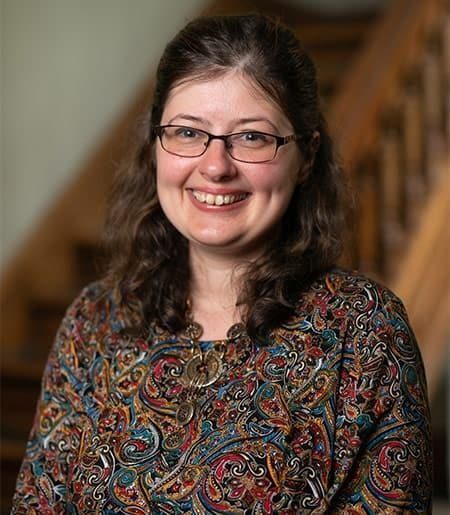
Cristina Florea is an Assistant Professor of History at Cornell University. She is interested in the interactions between German and Russian power (their competition for territory and influence) across this space, as well as the consequences these interactions have had for the people living in between. Her research focuses on the importance of imperial legacies in modern European history, and the centrality of imperial competition to East European politics and societies.
This conversation is part of the spring seminar series with the Reppy Institute for Peace and Conflict Studies (PACS).
Register here
In accordance with university event guidance, all campus visitors who are 12 years old or older must also present a photo ID, as well as proof of vaccination for COVID-19 or results of a recent negative COVID-19 test. If you are not currently participating in the Cornell campus vaccination/testing program, please bring proof of vaccination or the results of a recent negative test.
Additional Information
Program
Einaudi Center for International Studies
Reppy Institute for Peace and Conflict Studies
Institute for European Studies
Patricia Young

Senior Program Manager
Patricia Young is the Senior Program Manager for the Institute for European Studies and the Reppy Institute for Peace and Conflict Studies. She has a doctorate in Political Science from Rutgers University and a master's in Economics from the University of Victoria, Canada. She wrote her dissertation on market and democratic reforms in Eastern Europe and the process of European Union enlargement. She came to Cornell in 2019 as a lecturer in Sociology and Government, teaching on the Transformation of Socialist Societies. Patricia has previously lectured at Stanford since 2010.
Additional Information
IES Welcomes New Program Manager, Patricia Young

Patricia will join IES and the Einaudi Center on February 7th
Patricia Young is the new Program Manager for the Institute for European Studies. She has a doctorate in Political Science from Rutgers University and a master's in Economics from the University of Victoria, Canada. She wrote her dissertation on market and democratic reforms in Eastern Europe and the process of European Union enlargement. She came to Cornell in 2019 as a lecturer in Sociology and Government, teaching on the Transformation of Socialist Societies. Patricia has previously lectured at Stanford since 2010. She was born and raised in Romania and has lived in Canada and Mexico before moving to the US in 2004. She enjoys learning new foreign languages and hiking in Ithaca's gorgeous parks.
Additional Information
Program
Presenting the Second Talk in the IES Spring Speaker Series

Impossible Pluralism? Religious Minorities, Migrants and Unsettled European Democracy - a talk by Elisabeth Becker
Is pluralism possible in Europe? Are far-right parties like the Alternative für Deutschland (AfD) and the Front National (FN) fringe movements, or do they say something unsettling about the general state of democracy in Europe, today? The Post-World War II era in Europe was characterized by both devastation and hope for democracy, including a renewed political dedication to protecting plurality. Yet it was also characterized by the large-scale migration of guestworker and postcolonial migrants. Since these migrations, European nation-states and societies have grappled with the position of those who they first cast as foreigners, later as ethnic others, and today as Muslims in the European context. These boundaries between "us" and the other within came perhaps most pointedly into focus with the refugee crisis in 2015 that magnified long-standing conversations regarding who belongs to (and who is seen to threaten) the European imaginary, and the casting of both Muslims and refugees as uncivil in the political push for Brexit.
This talk is co-sponsored by:
Department of Sociology
Jewish Studies Program
Comparative Muslim SocietyProgram
Institute for Comparative Modernities
Religious Studies Program
Additional Information
Program
Virtual Info Session: Cornell Prelaw Program in Paris

February 16, 2022
5:30 pm
Have you considered summer study abroad and are interested in studying law? Join Cornell Law School faculty and the Office of Global Learning to learn more about the Cornell Prelaw Program in Paris, a three-week academic program in international and comparative law. Study law in a uniquely international and culturally rich environment, combining the excellence of Cornell Law School faculty and the Université Paris I Panthéon-Sorbonne. Prepare for the law school admissions process and acquire the study skills for success in law school.
Additional Information
Program
Einaudi Center for International Studies
Institute for European Studies
Impossible Pluralism? Religious Minorities, Migrants and Unsettled European Democracy

February 15, 2022
12:00 pm
REGISTER HERE.
Is pluralism possible in Europe? Are far-right parties like the Alternative für Deutschland (AfD) and the Front National (FN) fringe movements, or do they say something unsettling about the general state of democracy in Europe, today? The Post-World War II era in Europe was characterized by both devastation and hope for democracy, including a renewed political dedication to protecting plurality. Yet it was also characterized by the large-scale migration of guestworker and postcolonial migrants. Since these migrations, European nation-states and societies have grappled with the position of those who they first cast as foreigners, later as ethnic others, and today as Muslims in the European context. These boundaries between "us" and the other within came perhaps most pointedly into focus with the refugee crisis in 2015 that magnified long-standing conversations regarding who belongs to (and who is seen to threaten) the European imaginary, and the casting of both Muslims and refugees as uncivil in the political push for Brexit.
In this talk, Professor Elisabeth Becker will draw from her book Mosques in the Metropolis: Incivility, Caste and Contention in Europe, based on 2.5 years of ethnographic research in European mosques, in order to grapple with the failures and possibilities for European pluralism. She will specifically turn away from the so-called "Muslim Question" (echoing of the "Jewish Question" prior) and towards the Question of Europe: questioning the resiliency of democracy in this post-colonial/post-imperial age.
By bringing the voices of Muslim Europeans to bear on contemporary debates regarding ethnic, racialized, and religious minorities and migrants in Europe, Professor Becker will shed light on how ideals of freedom, equality, and progress have failed many of Europe's citizens. And yet she will also show how pluralizing the discourse on Europe's present can and does contribute to democratic resilience in this uncertain age.
This talk is co-sponsored by:
Department of Sociology
Jewish Studies Program
Comparative Muslim Society Program
Institute for Comparative Modernities
Religious Studies Program
Elisabeth Becker is an Assistant Professor/Freigeist Fellow at the Max-Weber Institute of-Sociology, Heidelberg University. Her Freigeist project “Invisible Architects: Jews, Muslims and the Making of Europe” reconceptualizes the formation of European societies by moving Jews and Muslims from the margins to the center of their stories. She is a cultural sociologist and public scholar focused on the experiences of ethnic, religious, and racial minorities and migrants in Europe. Elisabeth book, Mosques in the Metropolis: Incivility, Caste, and Contention, analyzes the enduring marginalization of Muslims in Europe through the ethnographic study of two of Europe’s largest urban mosque communities. Elisabeth also regularly writes for major publications like The Washington Post, Frankfurter Allgemeine Zeitung and Tablet Magazine (she was a 2020 Tablet Magazine Journalism Fellow) and collaborates with non-profit organizations including The New America Foundation, The Institute for Social Policy and Understanding, and The Landecker Foundation, where she is a democracy fellow. She is currently writing a book on Jewish Berlin (Passages: The Moving Lives of Jewish Berliners).
Additional Information
Program
Einaudi Center for International Studies
Institute for European Studies