
Faculty
Kaja Maria McGowan

Associate Professor, History of Art
Kaja McGowan’s studies the reciprocal relationships between neighboring countries in South and Southeast Asia. Her research explores the flow of ideas and artifacts along this highway—architecture, bronzes, textiles, ceramics, performance traditions, and visualizations of texts like Panji Malat, the Ramayana, and the Mahabharata. The reciprocal flow accounts for the shaping of ideas and the development of styles across vast geographical and historical distances.
Geographic Research Area: India and Indonesia
Additional Information
Program
Role
- Faculty
- SAP Core Faculty
- SEAP Core Faculty
Contact
Email: kmm22@cornell.edu
Phone: 607-255-7068
Lawrence J. McCrea

Professor, Asian Studies
Geographic Research Area: India
Teaching/Research Interests: Sanskrit poetics, text interpretation, and Buddhist studies
Additional Information
Kathryn March

Professor Emerita, Anthropology
Geographic Research Area: Nepal and the Himalayas
Teaching/Research Interests: Gender, ethnicity, religion and culture
Additional Information
Program
Role
- Faculty
- SAP Core Faculty
- SAP Professor Emeriti
Contact
Email: ksm8@cornell.edu
Phone: 607-255-5127
Mukul Majumdar

Professor Emeritus, Economics
Geographic Research Area: India
Teaching/Research Interests: Sustainable economic development, intertemporal decentralization, dynamical systems, and allocation theory and international trade theory
Additional Information
Program
Role
- Faculty
- SAP Core Faculty
- SAP Professor Emeriti
Contact
Email: mkm5@cornell.edu
Phone: 607-255-3540
Neema Kudva
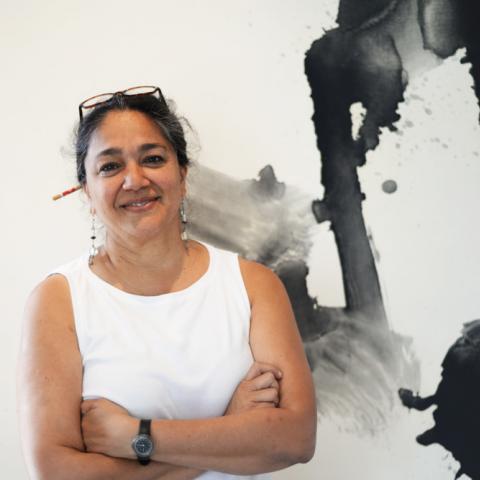
Associate Professor, House Professor, and Dean, Carl Becker House
Geographic Research Area: India
Teaching/Research Interests: Urbanization, planning theory, research methods, transborder/transdiscipline engaged learning
Additional Information
Program
Role
- Faculty
- SAP Core Faculty
- SAP Steering Committee
Contact
Email: kudva@cornell.edu
Phone: 607-255-3939
Mary Fainsod Katzenstein

Stephen and Evalyn Professor of American Studies Emerita
Geographic Research Area: India and United States
Teaching/Research Interests: Incarceration, political activism, ethnic activism, and gender
Additional Information
John Wolff

Professor Emeritus, Linguistics and Asian Studies
Research Interests: Historical linguistics, lexicography, Austronesian linguistics
Additional Information
Karim-Aly Saleh Kassam
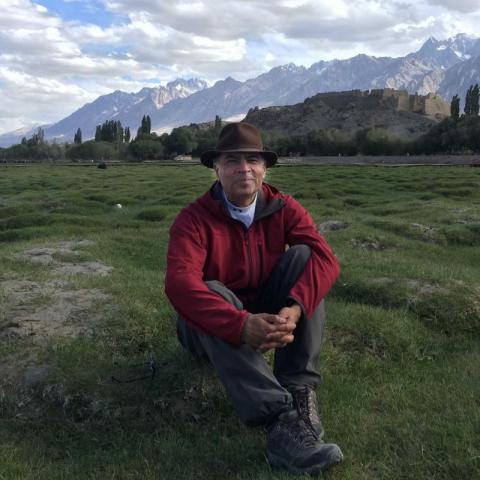
International Professor of Environmental and Indigenous Studies
Additional Information
Program
Role
- Faculty
- PACS Steering Committee
- PACS Minor Field Instructor
- SAP Core Faculty
Contact
Email: ksk28@cornell.edu
Phone: 607-255-9757
James Siegel

Professor Emeritus, Anthropology and Asian Studies
James Siegel retired from full-time teaching in 2007. He is the last of the second-generation SEAP faculty to retire. Like other emeritus SEAP faculty, he retains an office at the Kahin Center and is available to help mentor future scholars of Southeast Asia.
Additional Information
Stan O'Connor

Professor Emeritus, Art History and Asian Studies
In 1964, before he completed his PhD, Stan O'Connor was invited to become an instructor in the Department of the History of Art; this was the first university-level appointment in America of a specialist in the field of Southeast Asian art. In 1971, he was appointed full professor.
Contrary to the usual stereotype of an art historian, he was an excellent administrator. From 1966 to 1970 he served as chair of the Department of Asian Studies; from 1971 to 1976 he chaired his own department; and from 1979 to 1984 served the Southeast Asia Program as one of its ablest directors.